New Zealand is a location that gives our company, and with it our partners, significant advantages of business environment, quality of demand, and market positioning.
For a company involved in marketing premium sailing products, New Zealand provides one of the best product-testing grounds anywhere. With a longer coastline than any other country in the world (relative to land mass) ours is a truly maritime nation. Magnificent sailing conditions and a proud tradition in competitive yachting mean that sailing is a major influence on our lives, on how we spend our leisure time, and on how we use our incomes. The benefit we gain from being so close an active marine market as large and discerning as ours is near impossible to quantify.
Because of our sailing environment and our high sporting ambition as a nation, New Zealand and its sailors have an extremely strong reputation internationally. Outstanding victories in practically all major world sailing competitions by New Zealand skippers, crews, boats and boat designs have, over the last 40 years, contributed to a perception of New Zealand as a superpower of sailing. Naturally this does a great deal to cast credibility on the New Zealand marine industry – in which Line 7 plays an important and very active role.
The pinnacle of New Zealand’s proud sailing history is, without a doubt, the winning of the America’s Cup in San Diego in 1995 – where motivation, sailing skill and experience, teamwork and technology combined to provide a spectacular and convincing result. Team New Zealand’s victory was a result savoured and celebrated by all New Zealanders and sailing fans worldwide.
As the exclusive supplier of clothing to Team New Zealand in 1995, 2000 and 2003 and 2007, as well as several New Zealand sailing representatives at the Olympic Games - we at Line 7 are proud of the contribution we are able to make to New Zealand’s exemplary international sailing record.
We like to believe that the outstanding qualities that underpinned Team New Zealand’s victory are values to be lived by in our own field of competition. We continue to work hard to maintain the attitude and level of excellence required to earn the same results and reputation our most famous wearers have earned.
I was born here. My Tattoo Co. logo represents the Southern Cross. My Tattoo Co. name is Southern Guns which refers to the Southern Cross. I am Tangata Whenua (People of the Land). Everything about my Tattoo Co. is New Zealand based and I even took it upon myself to create a fern for Tattooing like there is for the Silver Ferns, All Blacks etc. I am the founder and Rep for a Global Tattoo Club called 13 Needles Tattoo Club. The one thing that makes me made from New Zealand is that I was born from the soil of Papatuanuku and raised by the sky of Ranginui. Southern Guns Tattoo
Sonia Yoshioka-Carrol talked with Founder Steve Adams to discover the twists and turns that journey has taken and why New Zealand businesses will ultimately benefit.
When the team at Made From New Zealand (MFNZ) lead by Steve Adams started their journey with the creation of a giant silver fern on Bethells (Te Henga) Beach in 2001, little did they know just how long it would take to really develop their global brand, and the online community around it.
To clarify – this is not the “Buy New Zealand Made” campaign featuring the kiwi in a triangle. That’s a separate private business that licenses their icon to be used on products “substantially transformed” in New Zealand. The Ministry of Economic Development (MED) also runs a “Buy Kiwi Made” campaign designed to boost home grown support of NZ manufacturers in partnership with Buy New Zealand Made Limited, so you can see it’s a bit of a confusing space to inhabit. The essential idea for MFNZ was to build an online community that showcased New Zealand’s talents to the world. But first, they needed to create a buzz around the project and generate some cashflow. Thus the Made From New Zealand t-shirt was born. 10,517 tees were produced for sale, each containing a length of ‘magic thread’ stitched into the neck, spun from a kilometer of New Zealand merino blended with a genuine woolen sock donated by the late Sir Ed Hillary. “The thread represents the Kiwi DNA” says Adams, “the common gene that New Zealanders have wherever they are in the world”.
And why 10, 517 t-shirts? That’s the distance between the Bethells and Santa Monica beaches – where the next leg of the journey was headed. They decided the only way to get a global brand launched was to create an international buzz, and where better than California? Home of movie stars, swimming pools and the Beverly Hillbillies – it’s the ultimate hype factory.
Fast forward to the 6th of February 2007, and seven camera crews, a couple of big diggers, one thousand New Zealanders and the Made From New Zealand team created a huge buzz by building a giant silver fern on Santa Monica beach. Not only was the event covered by US networks and both major New Zealand television networks, there was a live cross to Maori Television throughout Waitangi Day and an onsite documentary crew. But how did they get there? It wasn’t just through t-shirt sales. In order to really pump life into the project, they needed corporate sponsors. The campaign caught the attention of Air New Zealand, who embraced the concept and provided airline tickets for the fern-builders in exchange for Made From New Zealand tee shirts for their staff and customers: when the Waitangi Day flight touched down in LA, every passenger had a surprise tee hidden under their seats.
The next corporate to sign a cheque was Telecom, and they’ve been an enthusiastic partner ever since. “Telecom is a Made From New Zealand telco,” said Adams, “and as one of the biggest companies on the New Zealand Stock Exchange, it’s a fantastic partnership.” In fact, as we went to press, Telecom had just signed an agreement to enable the Made From New Zealand community in a variety of ways, including marketing, provision of resources and ongoing support.
New Zealand Trade & Enterprise (NZTE) also helped support MFNZ get to Santa Monica, and bought MFNZ tees as well. Since 2003, NZTE’s own export-led website www.marketnewzealand.com has been profiling New Zealand exporters and connecting them with international opportunities. According to Julian Moore, Group General Manager Marketing, Corporate Services: “Market New Zealand has an average of 43,352 unique visitors per month, and 68,000 emails have been sent directly to exporters via their profiles on the MNZ website over the past 5 years: 9800 so far this year (to the end of August 2008). There are about 3100 exporters profiled on the Market NZ website.”
But what value was MFNZ bringing to these corporate sponsors, and what value was it trying to create as an online community? Steve Adams explains the incremental stages of the project so far: “in order to set about building the community, we had to have some market research done. We knew the first cut was to establish an online site, so we started by selling the t-shirts to generate some cashflow. Then we had to establish partnerships with corporates and the media, with the idea of creating essentially open source visual content they could use.”
With the global media now aware of the brand and corporate partnerships in place, the next step was to work out what the online community would look like. Here NZTE’s efforts also played a part, because Adams met the next generation of MFNZ owners/contributors: Patrick MacFie, Tim Norton and John Clegg at an NZTE Escalator event.
“We’d started to build a brand,” said Adams, “and now we had to create a product. It’s not traditionally how a business should be built but neither is our business model. Just for a change, it’s not revenue focused. It’s about creating New Zealand’s largest international consumer-facing online community.” Adams sees MFNZ’s online community as something best created by the private sector, because they can take risks being creative and tapping into resources from other New Zealand businesses.
Finding other passionate entrepreneurs who were willing to help Adams create an organic, effective online community helped MFNZ focus on what they were delivering: “we now understand the value proposition, and how it will look.”
Central to creating the MFNZ online community will be minimal barriers to joining and participating. “We want to help businesses get more exposure and help content providers by giving them easy access to content,” said Adams. “Take an organics business as an example. They grow and create products that have a global demand. They also need access to a portal where they can share ideas with other organics businesses. We also want to help promote these businesses online, and act as a recruiter for them – generate global leads they can use to build their business.”
Being an online business is not for the faint-hearted. The 2006 Central Online Management and Export Trade Accelerator (COMET) Project focused on 30 participants from around New Zealand looking to set up their own online businesses. The idea was to document the process they went through, and the hurdles they faced along the way, and identify market failures and barriers that government policy might be able to redress.
According to Rachel Dillon, Policy Analyst, Firm Capability, I & RD from the MED, they surveyed the participants a year later to see how the companies had succeeded in generating international sales. “The results were fairly marginal at best and served to underscore the main findings of the project, which were that the owners needed to be self-driven; that clear channels to market needed to be identified; that search engine optimisation is key and that an aggregated marketplace may be one mechanism to help address the latter two,” said Dillon. Adams understands the pitfalls other online communities have faced and is passionate about making the Made From New Zealand brand one that effectively generates global cut-through. “New Zealand is currently in a bit of a dark zone on Google.com – not so much with Google.co.nz.” said Adams. “We’ve got the software development capabilities to build smart online links and a use-friendly interface. Ideally MFNZ could also be used as a channel for New Zealand-based SaaS providers.” As an additional resource, NZTE’s Moore says the development of their
e-business guide has so far helped 2,400 businesses work their way through the global online business minefield.
The guide features checklists, background information and good practice examples on a range of e-business subjects. The information is presented in a “learn as you go” format so that businesses can progressively develop their e-business capabilities.
“Once businesses have registered they are able to work through a series of activities to develop their online presence, at their own pace,” said Moore. If required, an adviser is also available to talk them through the various stages and help them resolve any problems they may encounter.
Moore said the guide was revamped in February, and user feedback on both the guide’s content and the step-by-step format has been very positive. So will the MFNZ online community have legs? The team have already shown they can make a noise and generate global excitement when it counts. They’ve also shown that they’re willing to sit down with others who have been successful in the global market, and learn from them. Above all, they’re happy to admit it’s still a work in progress, but with the help and input of interested and experienced people, they’re confident the community will thrive. Made From New Zealand could be a global identity to be reckoned with. It’s up to New Zealanders to stand up and support our own. So is your business willing and ready to step up? Visit the website: www.madefromnewzealand.com
When Jeremy Moon first tried on a t-shirt made of merino wool, down on an isolated South Island farm in Marlborough (surrounded by 8,000 sheep), he knew he was onto something special. The singlet felt remarkably good – close-fitting, comfortable, warm. And it was 100% natural. The farmer who’d made the singlet had done nothing special to it. It was, Jeremy recalls, not exactly a fashion statement – but the potential was there to be seen.
So Jeremy faced both an opportunity and a challenge. The opportunity was the value of wearing merino wool. He was sure people would pay for an experience like that. The challenge was communicating that value: how would people know that wearing merino was so worthwhile?
Jeremy’s answer was icebreaker. From startup in 1994, the company is now a global brand, with the majority of their merino-based clothing sold overseas. The brand stands for naturalness, beauty, and performance. In large part through the efforts of Icebreaker, merino wool is now widely known as a premier clothing material – the chief ingredient of high quality, outdoors-ready, natural clothing.
Jeremy Moon himself had little business experience when starting Icebreaker. He was 24, and after his first 80 page business plan and facing his first potential investor, he still didn’t know what accounts were. Early mentoring from people like Peter Travers, a former banker, and Noel Todd, a highly respected businessman, was invaluable. Peter and Noel became both investors and directors – providing safe hands that could direct governance while Jeremy learned the day-to-day tasks of building and running a business. And they still are.
But even with their help, it wasn’t easy. Says Jeremy, “I always felt that I knew what to do next, but not how to do it. Every day was a huge learning experience. I became a good listener and learnt how to ask the right questions, and how to find people who could help… and I made sure I thanked them.”
Jeremy has found that the challenges change as the company grows, but they don’t stop. As he tells those who are starting their own businesses, the key to facing challenges is being proactive and highly goal-oriented. You’ve got to start with where you want to be and what you want to achieve, and work backwards to the present, filling in the necessary steps to make the goals. Only in this way can you hope to set the agenda for the challenges and work out where to allocate time.
The Icebreaker brand is now well established. But there’s no resting on laurels. Jeremy continues to drive initiatives to promote Icebreaker’s kinship with nature and the integrity of the brand – such as Baacode, a unique tag assigned to each garment that allows the entire production history, right back to the sheep stations that produced the wool, to be traced. This gets the customer as close as possible to Jeremy’s original experience: standing on the farm, surrounded by the sheep, trying on that first t-shirt.
In January this year Wellington Based Web Development Company SilverStripe was thrust into the international spot light by being awarded the contract to build the Official U.S. Democratic Convention website.
To give you some idea of the scale, recent released traffic statistics of the site measured 2.6 Billion Hits and 3.2 Million visitors during the four day convention and more than 350,000 hours of video had been viewed.
With thousands of CMS applications around the world, what was it about the SilverStripe platform that cemented the deal?
CEO of SilverStripe Brian Calhoun says that it ticked all the right boxes with the ability to integrate with third parties, the ability to scale and a high level of support throughout the convention.
“Being awarded the Convention site was validation that the Silverstripe CMS rates as one of the best in the world” say Calhoun. Ten months on from being awarded the Democratic site, international sales now account for 30 percent of their revenue, staff numbers have increase by 30 percent and they have just recently shifted into new premises.
SilverStripe’s international profile has also gone through the roof with Ohio State University carrying out a one year research program to find out which CMS they would use for their libraries. After using comparison techniques and going through a rigorous selection process the Silverstripe CMS came out on top. This was a nice surprise as Calhoun attended Ohio State University back in the 80s.
SilverStripe was also awarded the California Women’s Convention site which is spear- headed by Arnold Schwarzenegger and First Lady Maria Shriver. The convention is the largest Women’s event in America with 14,000 women in one arena.
The focus has strongly shifted for SilverStripe to international markets; with co-founder Tim Copeland based out of the United Kingdom, SilverStripe is now looking for opportunities to grow the business further.
Auckland based game design company IQideas Ltd is slowly but surely conquering the world with their award winning range of educational boardgames. Established on a plane trip back from the Melbourne Toy Fair in 2005 (the first business plan was written on the back of an airline sickbag!) the company has evolved into a serious player in the multi-billion dollar global boardgame market, with exports being channelled to markets across the USA, Australia, Germany, France, Scandinavia, the Middle East, Singapore, Malaysia, and Indonesia.
It hasn’t been an easy journey though. The company was created on the basis of a creative idea care of founder Andrew Baker. Studying to be a maths teacher back in the early 1990s, he came up with an innovative way of teaching children mathematical concepts using a 3D puzzle and game. Named the ‘miQube’ Baker’s invention languished in a shoe box for a decade, before being dusted off and submitted for a prestigious international game award. Winning this award was the impetuous for launching the product to the market.
Fast forward to 2006 and the International Toy Fair in Nuremberg, Germany where IQideas was the only NZ exhibitor in the biggest industry event in the world, with their chance to introduce miQube to a captive audience of 85,000 buyers. With the smallest booth at the show, but a powerful pitch and a determination not to be intimidated by the “Big Boys”, their product generated enough distributor and public interest to transform the game in to a business. Product ideas from other designers started flooding in and the company has gone on to launch a range of highly successful strategy and educational games.
Marketing to both the family and school markets, there have been numerous challenges along the way, particularly in the export space. Manufacturing offshore in order to keep their games affordable has been a major challenge, with an initial shipment of product literally “falling apart on the wharf in Auckland” resulting in near bankruptcy, however, a gutsy determination to pick themselves up and keep searching for a reputable partner has paid off with a range of quality NZ designed games being marketed to the world.
What have they learnt? The power of PR and having a great story to tell, investing in the key international Trade Shows, making a personal commitment to get face-to-face with international customers despite the distance and expense involved, all have been keys to the success of the company.
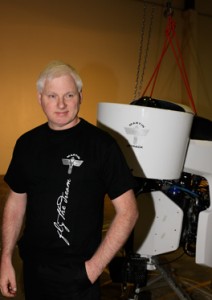
When it comes to flying high, Glenn Martin seems to have mastered the concept in more ways than one.
Glenn is an innovative inventor from Christchurch who has proven that it isn’t just the big multi national companies that can introduce amazing technology to the every day man. Glenn’s company has developed a product that is now known all over the World, even though the first one won’t be delivered until next year.
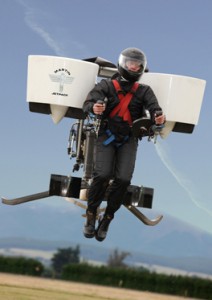
So what is this piece of technology that has wowed thousands of people? No, not software, not a new electric fence, in fact it is a personal Jetpack. Yes, a jetpack, or the Martin Jetpack to be precise. Unlike the last personal jetpack that flew for less than thirty seconds at a time, the Martin Jetpack can fly for up to 30 minutes, and the Martin Aircraft Company Ltd is now the talk of the aviation industry around the World.
Glenn believes the way to break into the World market is to “Go overseas, and have a look at the opportunities yourself, it is often very different from how you would think it is when sitting here in New Zealand”. Glenn advises those with a business to promote, send the principals of the company, “the hierarchy”, to market the business rather than just the Marketing Manager. This is just what Glenn did, when he publicly launched the Martin Jetpack at the huge USA based OshKosh Air Show on the 29th July this year.
“We had one of our Directors out there at the air show selling T Shirts; he learnt a huge amount about the type of customers interested in our product a whole lot better than he would from a bunch of written reports.”
Using the people most passionate about the business is also a must, “If you aren’t confident in presenting to people, just practice, and each time you do it you will learn something and improve for the next time”.
The biggest challenge the Martin Aircraft Company has faced is the same one many others face, financing the project. So what does Glenn advise to those many other business people struggling to get their business financed?
“Develop your products are far as you can, spending money on only what you absolutely must. Once you have a working prototype, take this to the financers and show them what you have.” Glenn spent over 25 years developing his product “In the garage, I didn’t have a fancy office and laser printer”.
So where to now for the Martin Aircraft Company? Since the hugely successful launch at the OshKosh Airshow, Glenn has had numerous applications for distributorships of the Martin Jetpack all around the World, as well as several orders. The first JetPack is due to be delivered in July 2009, with many more to follow.
Glenn Martin has proven that with a passion, and developing your business as far as you can before launching it to the market, NZ businesses can succeed overseas and wow the international business community with our innovation and motivation.
Most New Zealanders are familiar with the Les Mills chain of gyms but did you know that the same Kiwi brand is also behind some of the world’s most popular workouts?
Health club attendance is now the biggest adult “sport” in the Western world – bigger than football, tennis and golf combined – and Les Mills is leading the way when it comes to providing group exercise programs to this important market.
Every week an estimated 5 million people work out to LES MILLS™ Group Fitness Programs in more than 12,000 clubs globally and they’re all developed right here in Aotearoa. The programs are found in Gold’s Gyms throughout the USA, have featured on MTV in the Netherlands and have just launched in India, Egypt and Turkey.
It all started back in 1968 when namesake “Les Mills” – an Olympic and Commonwealth Games athlete who went on to become Mayor of Auckland – opened his first gym in the city.
Two decades later, Les Mills’ son – Phillip Mills – discovered group exercise-to-music classes while studying in America and, inspired by their potential, introduced the concept to the family gym back home.
Phillip’s instinctive belief that gym-goers would love the combination of uplifting music, inspiring instructors and high-energy moves was spot-on, and the revolutionary BODYPUMP™ became instantly popular in New Zealand, before taking off in Australia in 1995, and the rest of the world from 1997.
There are now eight programs on offer from Les Mills: BODYATTACK™ (high-energy cardio), BODYBALANCE™/BODYFLOW® (Yoga, Tai Chi, and Pilates), BODYCOMBAT™ (Martial Arts), BODYJAM™ (dance cardio), BODYPUMP™ (weights) BODYSTEP™ (step aerobics), BODYVIVE™ (low intensity cardio and resistance training) and RPM™ (indoor cycling).
The programs are updated every three months with new licensed music and choreography and distributed on DVD to more than 60,000 trained and certified instructors.
Today, Les Mills has turned group exercise into a profit center for health and fitness clubs around the world. Members get a world-class fitness experience that is simple for clubs to manage thanks to a comprehensive group fitness system that includes:
1) LES MILLS™ Group Fitness Programs
2) Instructor Training and Development
3) Group Fitness Management (GFM) System
4) Les Mills’ Marketing.
Luke Howard-Willis loved mountain biking, but when he realised that he and his friends were buying gear on-line from the United States, he called on his business brain - not his riding skills - to find a better way.
The result was Torpedo7, a Hamilton-based on-line store offering sporting goods direct to consumers within 24-hours of them placing their order.
Although mountain biking was the catalyst, Torpedo7 quickly branched out into all facets of cycling. Now the company stocks gear for mountain bikers, road cyclists, BMXers, motocross riders, snowboarders, skiers and outdoor enthusiasts.
For Luke it’s been a hell of a ride. He founded the company in late 2004. Today Torpedo7 employs 70 people, has a small but growing operation in Melbourne and is on target to turn over $30 million in this financial year.
Torpedo7 imports goods from all over the world, promising customers fast delivery times, a good price and a 365 day right of return if they’re not satisfied with the quality.
There are few complaints. In fact, in June 2007 Luke launched another on-line store,
1-day.co.nz. The store offers three widely different products at massive discounts for just one day before changing the products and putting something else up for sale the next.
Has it gone well? According to Luke, 1-day.co.nz is now the second most visited site behind TradeMe in New Zealand. Early next year, he’ll be launching the same concept in Australia where he has recently established a warehousing operation to support Torpedo7.
Just eight years after graduating Luke now finds himself heading two companies, travelling to Australia on business at least once a month, and travelling regularly to Asia, the United States and Europe to secure products and assess market trends.
It’s a long way from mountain biking but at least now when he needs gear, Luke knows exactly where to go.